Buy lyh.eu ?
We are moving the project
lyh.eu .
Are you interested in purchasing the domain
lyh.eu ?
domain@kv-gmbh.de · 0541-91531010
Buy lyh.eu ?
What is the difference between proportional and inverse proportional?
Proportional and inverse proportional relationships are two types of relationships between two variables. In a proportional relationship, as one variable increases, the other variable also increases at a constant rate. This means that the ratio between the two variables remains the same. In an inverse proportional relationship, as one variable increases, the other variable decreases at a constant rate. This means that the product of the two variables remains constant. **
How can one recognize proportional and inverse proportional relationships?
Proportional relationships can be recognized when two quantities increase or decrease at the same rate. This means that when one quantity doubles, the other quantity also doubles. Inverse proportional relationships, on the other hand, can be recognized when one quantity increases while the other decreases at a constant rate, or vice versa. This means that when one quantity doubles, the other quantity is halved. One can recognize these relationships by plotting the data on a graph and observing if the points form a straight line through the origin for proportional relationships, or if the points form a curve for inverse proportional relationships. **
Similar search terms for Non-proportional
Top-Angebote
Products related to Non-proportional:
-
HarperCollins Children's Books Fitter, Healthier, Happier! by Joe Wicks - Illustrated Kids' Health & Fitness Book - Ages 7-11 - Paperback - Exercise, Nutrition, Sleep & MindsetGet fit, feel happy, and be healthy with this fun and easy-to-understand guide for kids aged 7-11. Written by global fitness phenomenon Joe Wicks, this fully illustrated paperback explains how the body works, why movement matters, how to eat well, and how sleep and mindset support wellbeing. It's perfect for curious young readers who want to learn about staying healthy and happy at home or in the classroom. Learn all about your body and mind with this dynamic, fact-filled children's book from Joe Wicks, best known for his energetic and encouraging style in PE with Joe and Activate.4,99 £*Shipping: 2,99 £Secure redirect to the provider
-
Orion The Telomere Effect by Elizabeth Blackburn & Elissa Epel - Paperback Health & Longevity Book - Non-Fiction Wellness GuideDiscover the secrets of healthy ageing with 'The Telomere Effect' by Elizabeth Blackburn and Elissa Epel. This groundbreaking guide, written for adult readers, reveals how everyday lifestyle choices can impact our cellular ageing and telomeres. Drawing on decades of research, the authors provide clear, actionable guidance for living a healthier, longer life. Dr Elizabeth Blackburn, a Nobel Prize-winning biologist, teams up with Dr Elissa Epel, a leading health psychologist, to distill complex biology into accessible advice. This paperback edition is a must-read for anyone interested in understanding the science behind healthy ageing and taking control of their own well-being.2,99 £*Shipping: 2,99 £Secure redirect to the provider
-
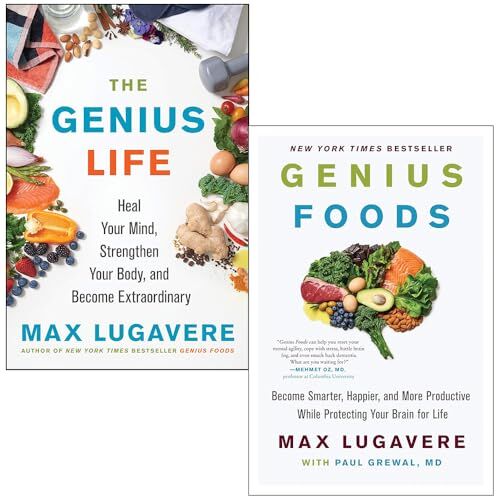
Harper ltd Max Lugavere 2 Book Set – Genius Foods & The Genius Life Brain Health, Nutrition & Wellness CollectionMax Lugavere 2-Book Collection Set (The Genius Life & Genius Foods – Nutrition, Health, Wellness, Diet, Brain & Body Health, Self-Help & Fitness) The Genius Life: Heal Your Mind, Strengthen Your Body, and Become Extraordinary: Supporting the work of Battersea Dogs and Cats Home.Enjoy a heartwarming dog to brighten every single day of the year. From Pickles, the dog who single-handedly saved the 1966 world cup, to Pal, who found silver screen fame as the original Lassie, Battersea's A Dog a Day contains 365 fascinating stories of dogs to enjoy throughout the year.Beautifully packaged and illustrated throughout with charming illustrations of cheeky puppies and hounds, this is the perfect book for any lover of our four-legged friends. Genius Foods: Become Smarter, Happier, and More Productive While Protecting Your Brain for Life: After his mother was diagnosed with a mysterious form of dementia, Max Lugavere put his successful media career on hold to learn everything he could about brain health and performance. For the better half of a decade, he consumed the most up-to-date scientific research, talked to dozens of leading scientists and clinicians around the world, and visited the country’s best neurology departments—all in the hopes of understanding his mother’s condition.Now, in Genius Foods, Lugavere presents a comprehensive guide to brain optimization. He uncovers the stunning link between our dietary and lifestyle choices and our brain functions, revealing how the foods you eat directly affect your ability to focus, learn, remember, create, analyze new ideas, and maintain a balanced mood.12,95 £*Shipping: 2,99 £Secure redirect to the provider
-
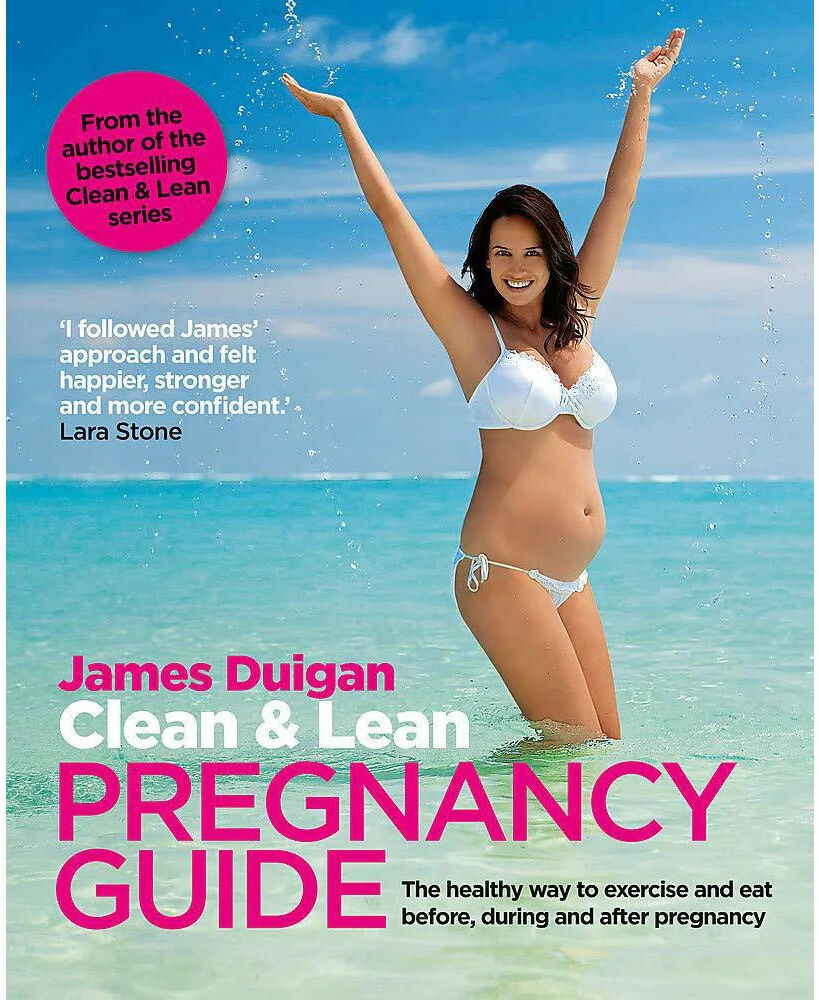
Kyle Books Clean & Lean Pregnancy Guide by James Duigan - Paperback Wellness Book - Fertility, Pregnancy & Post-Natal Exercise & Nutrition GuideThe Clean and Lean Pregnancy Guide by James Duigan is a health and wellness book that applies his popular Clean and Lean philosophy to the journey of becoming a mother. Covering fertility, pregnancy, and the post-natal period, this paperback guide offers gentle, trimester-appropriate exercises and straightforward eating advice for every stage. Written with warmth and drawn from Duigan's own experience as a first-time parent, it is designed to help expectant mothers feel strong, calm, and well-supported from bump to baby and beyond. The book includes a foreword by model Lara Stone and is published by Kyle Books.2,99 £*Shipping: 2,99 £Secure redirect to the provider


-
What is the difference between proportional relationships and inverse proportional relationships?
Proportional relationships are those in which the two variables increase or decrease at a constant rate. In other words, when one variable doubles, the other variable also doubles. In contrast, inverse proportional relationships are those in which one variable increases as the other decreases, and vice versa. In an inverse proportional relationship, the product of the two variables remains constant. In other words, when one variable doubles, the other variable is halved. **
-
What are proportional relationships?
Proportional relationships are relationships between two quantities where they change in a consistent manner. This means that as one quantity increases or decreases, the other quantity also increases or decreases in a predictable way. In a proportional relationship, the ratio between the two quantities remains constant. This can be represented by a straight line when graphed. **
-
Which of the relationships is inversely proportional and which is directly proportional?
The relationship between the distance traveled and the time taken is inversely proportional, as the faster you travel, the less time it takes to reach a destination. On the other hand, the relationship between the force applied and the acceleration produced is directly proportional, as increasing the force applied will result in a corresponding increase in acceleration. **
-
Which of the assignments is inversely proportional and which is directly proportional?
The assignment of distance traveled and time taken is inversely proportional, as the distance traveled decreases as the time taken increases. On the other hand, the assignment of force and acceleration is directly proportional, as the force increases, the acceleration also increases. **

How can I recognize if a function is proportional or inversely proportional?
You can recognize if a function is proportional by checking if the ratio of the output to the input is constant. In other words, if the function can be written in the form y = kx, where k is a constant, then the function is proportional. On the other hand, if the function can be written in the form y = k/x, where k is a constant, then the function is inversely proportional. Additionally, if the graph of the function is a straight line passing through the origin, it is proportional, while if the graph is a hyperbola, it is inversely proportional. **
How can one determine whether it is a proportional or inverse proportional relationship?
One can determine whether a relationship is proportional or inverse proportional by examining the pattern of the data points. In a proportional relationship, as one variable increases, the other variable also increases at a constant rate. This results in a straight line passing through the origin when the data is plotted on a graph. In an inverse proportional relationship, as one variable increases, the other variable decreases at a constant rate. This relationship is represented by a curve that approaches but never touches either axis when graphed. **
Top-Angebote
Products related to Non-proportional:
-
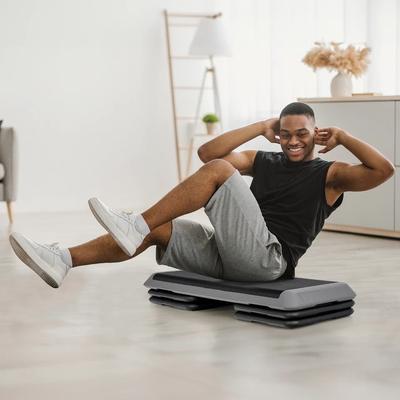
Multicon Wholesale Hub Adjustable Fitness Stepper, Exercise Aerobic Step Platform, Risers Grey, Non Slip Adjustable Fitness Stepper, Exercise Aerobic Step Platform, Risers Grey, Non SlipThe 43'' Exercise Aerobic Step Platform is a musthave fitness tool that transforms your workouts into effective aerobic exercises. Designed for versatility, durability, and convenience, this adjustable fitness stepper is perfect for anyone looking...121,97 $*Shipping: 0,00 $Secure redirect to the provider
-
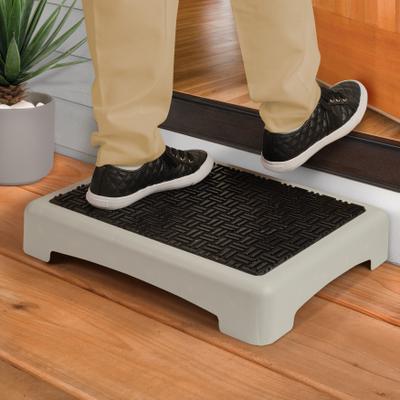
440 lbs. Weight Capacity Non-Slip Outdoor Step by North American Health+Wellness in Gray"Large platform makes it easier for those with limited ability to lift their feet and remain steady while stepping up. Comes with a slip-resistant rubber mat. Dimensions: 19 1/4""W x 15 1/2""L x 4""HPP/LDPE/TPRMax. weight: 440 lbs.Use on flat..."49,99 $*Shipping: 16,98 $Secure redirect to the provider
-
HarperCollins Children's Books Fitter, Healthier, Happier! by Joe Wicks - Illustrated Kids' Health & Fitness Book - Ages 7-11 - Paperback - Exercise, Nutrition, Sleep & MindsetGet fit, feel happy, and be healthy with this fun and easy-to-understand guide for kids aged 7-11. Written by global fitness phenomenon Joe Wicks, this fully illustrated paperback explains how the body works, why movement matters, how to eat well, and how sleep and mindset support wellbeing. It's perfect for curious young readers who want to learn about staying healthy and happy at home or in the classroom. Learn all about your body and mind with this dynamic, fact-filled children's book from Joe Wicks, best known for his energetic and encouraging style in PE with Joe and Activate.4,99 £*Shipping: 2,99 £Secure redirect to the provider
-
Orion The Telomere Effect by Elizabeth Blackburn & Elissa Epel - Paperback Health & Longevity Book - Non-Fiction Wellness GuideDiscover the secrets of healthy ageing with 'The Telomere Effect' by Elizabeth Blackburn and Elissa Epel. This groundbreaking guide, written for adult readers, reveals how everyday lifestyle choices can impact our cellular ageing and telomeres. Drawing on decades of research, the authors provide clear, actionable guidance for living a healthier, longer life. Dr Elizabeth Blackburn, a Nobel Prize-winning biologist, teams up with Dr Elissa Epel, a leading health psychologist, to distill complex biology into accessible advice. This paperback edition is a must-read for anyone interested in understanding the science behind healthy ageing and taking control of their own well-being.2,99 £*Shipping: 2,99 £Secure redirect to the provider
-
What is the difference between proportional and inverse proportional?
Proportional and inverse proportional relationships are two types of relationships between two variables. In a proportional relationship, as one variable increases, the other variable also increases at a constant rate. This means that the ratio between the two variables remains the same. In an inverse proportional relationship, as one variable increases, the other variable decreases at a constant rate. This means that the product of the two variables remains constant. **
-
How can one recognize proportional and inverse proportional relationships?
Proportional relationships can be recognized when two quantities increase or decrease at the same rate. This means that when one quantity doubles, the other quantity also doubles. Inverse proportional relationships, on the other hand, can be recognized when one quantity increases while the other decreases at a constant rate, or vice versa. This means that when one quantity doubles, the other quantity is halved. One can recognize these relationships by plotting the data on a graph and observing if the points form a straight line through the origin for proportional relationships, or if the points form a curve for inverse proportional relationships. **
-
What is the difference between proportional relationships and inverse proportional relationships?
Proportional relationships are those in which the two variables increase or decrease at a constant rate. In other words, when one variable doubles, the other variable also doubles. In contrast, inverse proportional relationships are those in which one variable increases as the other decreases, and vice versa. In an inverse proportional relationship, the product of the two variables remains constant. In other words, when one variable doubles, the other variable is halved. **
-
What are proportional relationships?
Proportional relationships are relationships between two quantities where they change in a consistent manner. This means that as one quantity increases or decreases, the other quantity also increases or decreases in a predictable way. In a proportional relationship, the ratio between the two quantities remains constant. This can be represented by a straight line when graphed. **
Similar search terms for Non-proportional
-
Harper ltd Max Lugavere 2 Book Set – Genius Foods & The Genius Life Brain Health, Nutrition & Wellness CollectionMax Lugavere 2-Book Collection Set (The Genius Life & Genius Foods – Nutrition, Health, Wellness, Diet, Brain & Body Health, Self-Help & Fitness) The Genius Life: Heal Your Mind, Strengthen Your Body, and Become Extraordinary: Supporting the work of Battersea Dogs and Cats Home.Enjoy a heartwarming dog to brighten every single day of the year. From Pickles, the dog who single-handedly saved the 1966 world cup, to Pal, who found silver screen fame as the original Lassie, Battersea's A Dog a Day contains 365 fascinating stories of dogs to enjoy throughout the year.Beautifully packaged and illustrated throughout with charming illustrations of cheeky puppies and hounds, this is the perfect book for any lover of our four-legged friends. Genius Foods: Become Smarter, Happier, and More Productive While Protecting Your Brain for Life: After his mother was diagnosed with a mysterious form of dementia, Max Lugavere put his successful media career on hold to learn everything he could about brain health and performance. For the better half of a decade, he consumed the most up-to-date scientific research, talked to dozens of leading scientists and clinicians around the world, and visited the country’s best neurology departments—all in the hopes of understanding his mother’s condition.Now, in Genius Foods, Lugavere presents a comprehensive guide to brain optimization. He uncovers the stunning link between our dietary and lifestyle choices and our brain functions, revealing how the foods you eat directly affect your ability to focus, learn, remember, create, analyze new ideas, and maintain a balanced mood.12,95 £*Shipping: 2,99 £Secure redirect to the provider
-
Kyle Books Clean & Lean Pregnancy Guide by James Duigan - Paperback Wellness Book - Fertility, Pregnancy & Post-Natal Exercise & Nutrition GuideThe Clean and Lean Pregnancy Guide by James Duigan is a health and wellness book that applies his popular Clean and Lean philosophy to the journey of becoming a mother. Covering fertility, pregnancy, and the post-natal period, this paperback guide offers gentle, trimester-appropriate exercises and straightforward eating advice for every stage. Written with warmth and drawn from Duigan's own experience as a first-time parent, it is designed to help expectant mothers feel strong, calm, and well-supported from bump to baby and beyond. The book includes a foreword by model Lara Stone and is published by Kyle Books.2,99 £*Shipping: 2,99 £Secure redirect to the provider
-
All Categories Goods Adjustable Aerobic Step Platform For Exercise Non Slip Exercise Stepper Adjustable Aerobic Step Platform For Exercise Non Slip Exercise StepperElevate your fitness routine with the versatile adjustable aerobic step platform. Ideal for anyone looking to improve cardiovascular health, this stepper is perfect for home workouts. The nonslip surface ensures safety while performing highintensity...114,97 $*Shipping: 0,00 $Secure redirect to the provider
-
Uplifted Finds Separate Waist Twisting Exercise Machine With Non Slip Texture For Core Fitness greenRevitalize your home workout routine with this Separate Waist Twisting Exercise Machine, a highperformance fitness utility designed to act as a comprehensive solution for core strengthening and balance training. Specifically engineered with a...135,95 $*Shipping: 0,00 $Secure redirect to the provider
-
Which of the relationships is inversely proportional and which is directly proportional?
The relationship between the distance traveled and the time taken is inversely proportional, as the faster you travel, the less time it takes to reach a destination. On the other hand, the relationship between the force applied and the acceleration produced is directly proportional, as increasing the force applied will result in a corresponding increase in acceleration. **
-
Which of the assignments is inversely proportional and which is directly proportional?
The assignment of distance traveled and time taken is inversely proportional, as the distance traveled decreases as the time taken increases. On the other hand, the assignment of force and acceleration is directly proportional, as the force increases, the acceleration also increases. **
-
How can I recognize if a function is proportional or inversely proportional?
You can recognize if a function is proportional by checking if the ratio of the output to the input is constant. In other words, if the function can be written in the form y = kx, where k is a constant, then the function is proportional. On the other hand, if the function can be written in the form y = k/x, where k is a constant, then the function is inversely proportional. Additionally, if the graph of the function is a straight line passing through the origin, it is proportional, while if the graph is a hyperbola, it is inversely proportional. **
-
How can one determine whether it is a proportional or inverse proportional relationship?
One can determine whether a relationship is proportional or inverse proportional by examining the pattern of the data points. In a proportional relationship, as one variable increases, the other variable also increases at a constant rate. This results in a straight line passing through the origin when the data is plotted on a graph. In an inverse proportional relationship, as one variable increases, the other variable decreases at a constant rate. This relationship is represented by a curve that approaches but never touches either axis when graphed. **
* All prices are inclusive of VAT and, if applicable, plus shipping costs. The offer information is based on the details provided by the respective shop and is updated through automated processes. Real-time updates do not occur, so deviations can occur in individual cases. ** Note: Parts of this content were created by AI.